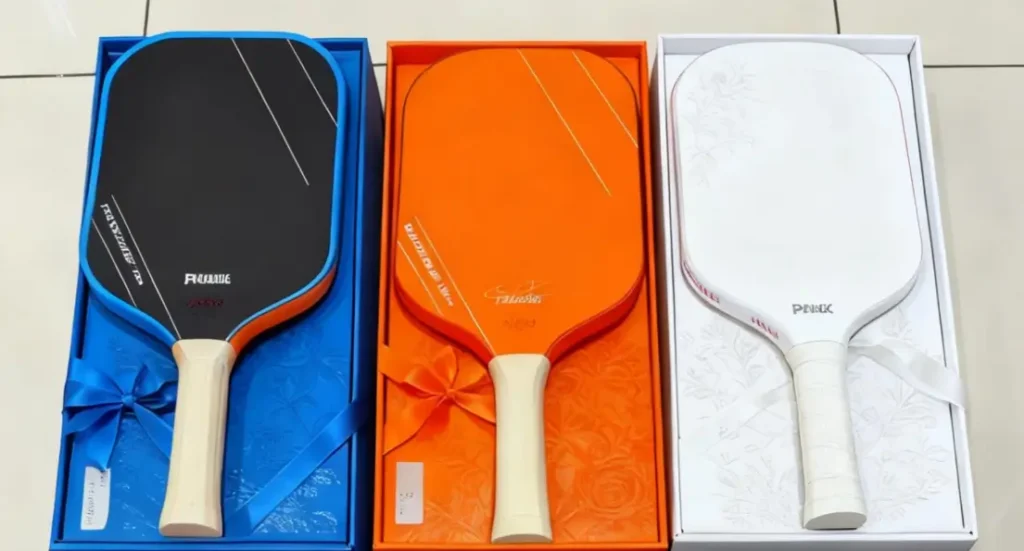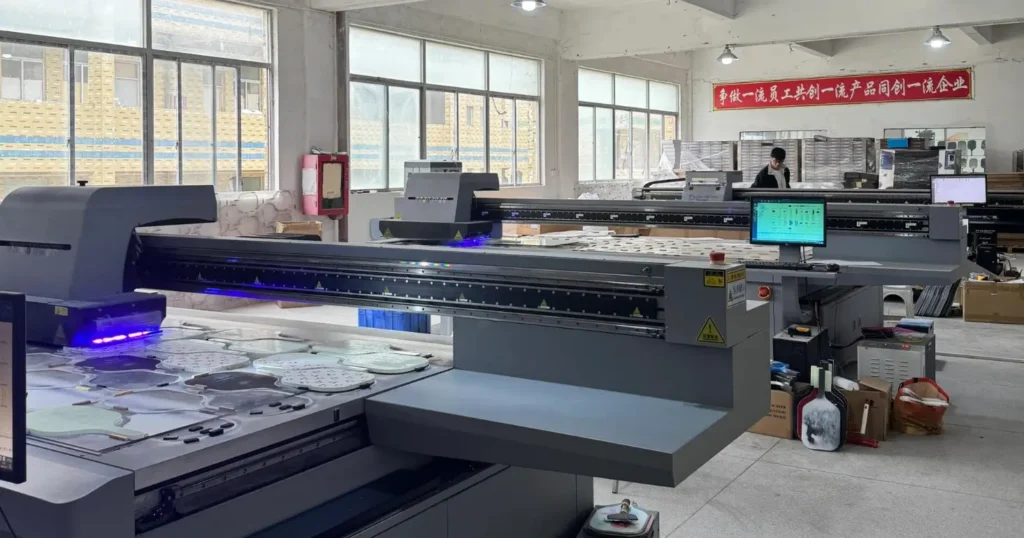
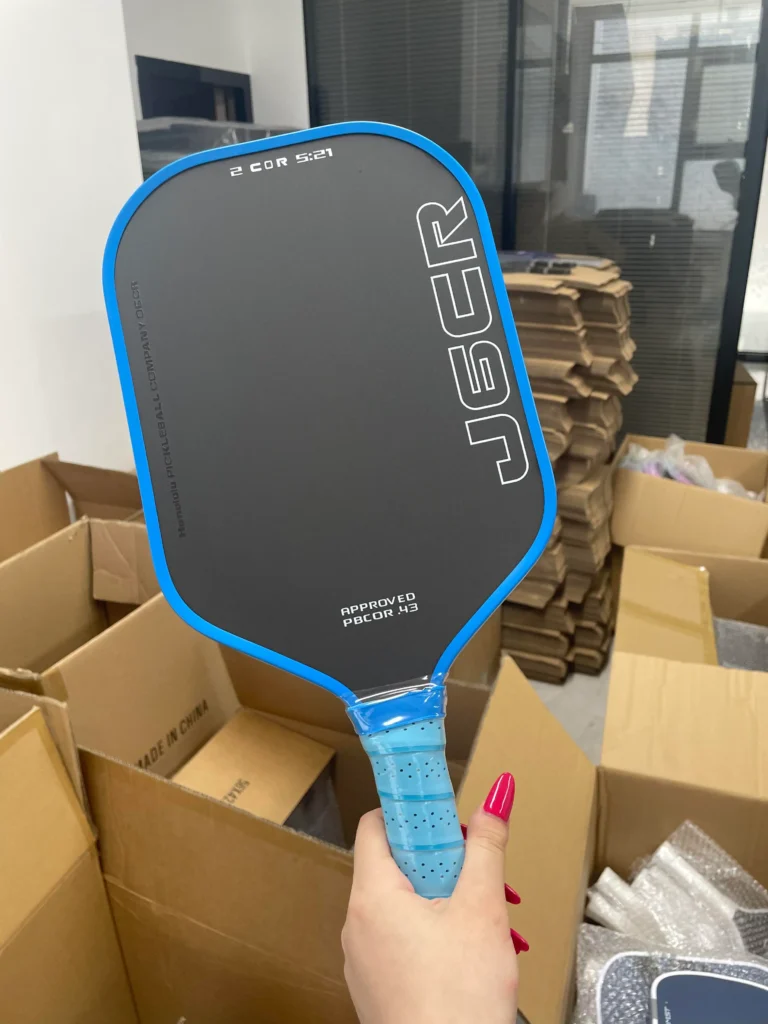
Personalized pickleball paddle: a finished paddle to which a manufacturer applies brand-specific surface elements—UV-printed graphics, laser-engraved marks, or applied labels—using the existing paddle structure rather than redesigning it from scratch. For B2B buyers, this is the fastest route from concept to a branded product on a court or shelf, with lower MOQs and shorter lead times than full custom builds. Apexonsport pickleball paddle factory manufactures personalized paddles for brand owners, distributors, e-commerce sellers, retailers, and wholesalers, with in-house UV print, laser engraving, label application, and packaging capabilities under one roof.
What Is a Personalized Pickleball Paddle? (And How It Differs from Custom & Private Label)
The terms personalized, custom, and private label are often used interchangeably across paddle sourcing pages, but for B2B buyers the distinction maps directly to budget, lead time, and product strategy. Mixing them up is one of the most common—and most expensive—decisions early-stage brand owners make.
Personalized vs Custom vs Private Label — Quick Comparison Table
| Dimension | Personalized | Custom (OEM) | Private Label |
|---|---|---|---|
| What changes | Surface graphics, logos, color combinations on existing models | Shape, materials, core, weight balance, structural build | Personalized or custom paddle + branded packaging + brand-owned SKU/UPC |
| Typical MOQ | 50–200 pcs | 500–1,000 pcs | 500+ pcs (often follows a personalized first run) |
| Sample lead time | 3–7 days | 10–20 days | 7–15 days (after spec lock) |
| Bulk lead time | 7–15 days | 25–45 days | 15–30 days |
| Best fit for | E-commerce sellers, clubs, gift programs, brand pilot launches | Established brands building proprietary product lines | Distributors and brand owners scaling a proven SKU |
| Capital exposure | Low | Medium-high | Medium (depends on packaging investment) |
Why This Distinction Matters for Your Sourcing Budget
A brand owner who treats personalized as if it were full custom ends up over-budgeting design, sample, and tooling work that the chosen path doesn’t actually require. A distributor who treats personalized as private label ends up shipping a logo-printed paddle without the SKU registration, packaging investment, or product detail page work that turns a paddle into a branded product. Pickleball paddle customization works best when the path matches the buyer’s actual goal—not when terminology is borrowed from another tier.
The clearest signal of a manufacturer who understands B2B buyers is whether they ask which path you’re on before quoting—rather than quoting one number for “logo printing” without context.
How Personalized Pickleball Paddles Are Made: UV Print, Laser Engraving & Labels
At Apexonsport, we apply three personalization methods on pickleball paddles, each suited to specific paddle areas and brand objectives. We use these methods because they hold up under court conditions—court contact, perspiration, sun exposure, and abrasion—rather than the cheaper alternatives common in lower-tier sourcing.
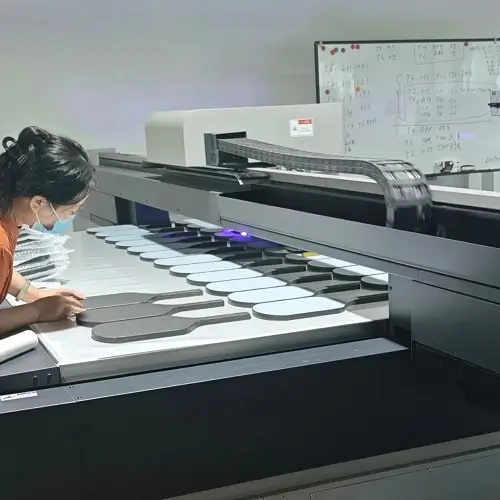
UV Print — The Workhorse for Logos, Graphics & Brand Color Systems
UV print is our primary method for logos, full-face graphics, and color schemes on the paddle face, edge guard, and grip. UV-curable inks cross-link with the paddle surface under ultraviolet light, forming a chemical bond rather than sitting on top of the surface like adhesive transfers. This is what allows a custom logo pickleball paddle to retain saturation through repeated court use rather than fading or peeling within months.
Our Q4 2025 internal QC tracking shows that UV-printed graphics on a textured matte surface retain color saturation through 14 weeks of outdoor court use, while the same artwork on a sandblasted matte surface reaches an equivalent visual color-retention point at the 16-week mark. Minimum readable type on both finishes holds at 4 pt, and color ΔE tolerance across a 200-pc batch stays within 1.5 units. UV print supports full CMYK and brand-specific Pantone matching when accurate input files are provided.
Laser Engraving — Permanent Marks for End Caps & Edge Guards
Laser engraving is our second method, applied primarily to the paddle’s end cap and edge guard. The laser removes a thin layer of material to leave a permanent mark that cannot fade, peel, or wash away. This makes it the right choice for the brand’s permanent identifying marks: brand name on the end cap, model code on the edge guard, or batch identification for tracking.
Laser engraving is not a substitute for UV print on the paddle face—it produces a single tonal mark, not full-color graphics. The two methods are complementary: UV print delivers the brand expression, laser engraving delivers the permanent identifiers. A complete branded pickleball paddle typically uses both.
Label Application — For Brand Tags, Batch Codes & Compliance Marks
Labels remain the right method for elements that need to be replaceable, regulatory, or non-permanent: brand swing tags, batch and date codes, retailer compliance markings, and country-of-origin labels. We apply labels primarily to the end cap and edge guard areas where they don’t interfere with playing surface or grip.
Pickleball Paddle Surface Finishes: Sandblasted Matte vs Textured Matte
The decision between sandblasted matte and textured matte (woven pattern) finishes is governed less by personal preference than by what artwork your brand intends to apply. Most paddle sourcing pages skip this discussion entirely; for a brand owner about to commit a 500-pc run, getting the pairing right is the difference between a paddle that looks intentional and one that looks like the artwork was applied to the wrong surface.
| Surface Finish | Recommended Artwork Type | Visual Effect | Brand Tier Fit |
|---|---|---|---|
| Sandblasted matte | Full-face graphics, large-area color blocks, edge-to-edge designs | Even matte surface that lets full-face artwork read as a single composition | Mass retail, high-visibility designs, gift and team programs |
| Textured matte (woven pattern) | Localized logos, isolated brand marks, minimalist designs | Woven texture frames the logo and adds tactile sophistication | Premium and pro-tier brands, clean minimalist visual systems |
Sandblasted Matte — For Full-Face Personalized Paddle Graphics
When the brand artwork covers the majority of the paddle face—a tournament edition, a club design, a holiday special, a gift program—we recommend sandblasted matte. The uniform micro-texture allows large-area UV print to read as a single composition without the visual interference of a competing surface pattern. Sandblasted matte is also our default recommendation for designs that include large color fields or photographic elements.
Textured Matte (Woven Pattern) — For Localized Custom Logo Placement
When the brand identity is a single logo or a localized mark on an otherwise clean paddle face, textured matte is the stronger choice. The woven pattern serves as a deliberate frame—drawing the eye toward the logo without competing with it—and gives the paddle a tactile premium feel that aligns with higher-tier brand positioning.
When to Override the Default Recommendation
Two situations call for overriding the standard pairing. First, if a brand has an established visual system that uses textured matte across all models—even on full-face designs—maintaining that consistency may outweigh the artwork-fit consideration. Second, if cost optimization is the priority for a particular SKU, sandblasted matte is generally a slightly lower-cost finish at scale and can be used with localized logos when budget governs the decision.
Cold Press vs Thermoformed Pickleball Paddles: Which One Fits Your Personalization
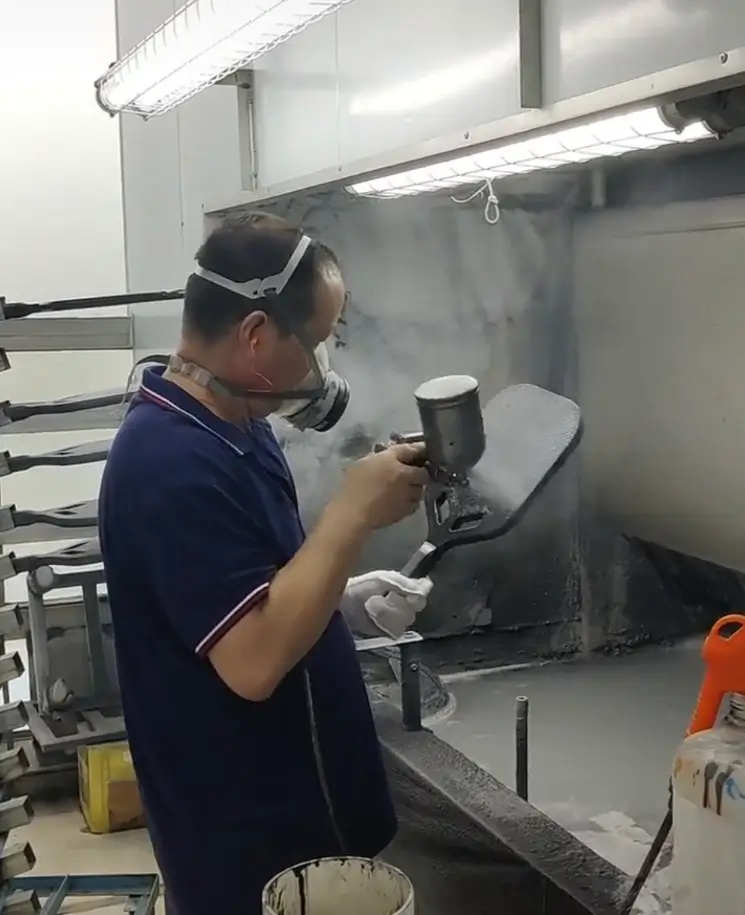
The construction method underneath your personalization—cold press or thermoformed—dictates how long that personalization lasts and how the paddle plays. The personalization itself is only as good as the paddle it sits on. We manufacture both methods and recommend each for different B2B scenarios.
| Construction | Cold Press | Thermoformed (One-Piece) |
|---|---|---|
| Process | Layered components bonded under pressure at lower temperature | Face, core, edge guard cured together as a single unit under heat and pressure |
| Durability | Suitable for entry-level retail use cycles | Significantly higher resistance to edge cracking and delamination |
| Feel and response | Standard pop, looser feel | More unified response, denser sweet spot, premium hand feel |
| Face material options | T700 carbon, T800 carbon, Kevlar, Titanium | T700 carbon, T800 carbon, Kevlar, Titanium |
| Core material options | Polymer honeycomb, trufoam foam core | Polymer honeycomb (recommended), trufoam foam core |
| Edgeless option | Not applicable | Available—but not recommended with trufoam foam core |
| Typical retail tier | Entry-level to mid-tier | Mid-tier to premium |
Cold Press — Entry-Level Builds with Full Material Options
Cold press is our recommended construction for entry-level personalized SKUs—gift programs, club orders, e-commerce starter ranges, and budget-tier retail product lines. Despite the entry-level positioning, cold press supports the full range of face materials including T700 and T800 carbon, Kevlar, and titanium, paired with either polymer honeycomb or trufoam foam core. This means a brand can launch an affordable SKU without compromising on face material quality—the cost saving comes from the construction method, not from cheaper face material.
Thermoformed One-Piece — When Durability and Feel Justify the Cost
Thermoformed one-piece construction cures the face, core, and edge guard as a unified body under controlled heat and pressure. The resulting paddle resists edge cracking and core delamination significantly better than cold-pressed equivalents and delivers the denser sweet spot and unified response that mid-tier and premium players expect. For brand owners building a flagship SKU or a tournament-tier product, thermoformed is the construction we recommend.
The Edgeless Question (And When We Recommend Against It)
Edgeless construction—a thermoformed paddle without a separate edge guard—has become a visual signature in the premium tier. We manufacture edgeless thermoformed paddles, but with one explicit recommendation against: we do not recommend edgeless construction with a trufoam foam core. The combination puts the foam core directly at the impact perimeter without the protective edge guard structure, accelerating wear at the most exposed area of the paddle. For brand owners drawn to the edgeless aesthetic, we recommend pairing it with polymer honeycomb core for a build that delivers both the visual appeal and the durability the premium tier expects.
Face Materials and Core Options for Personalized Pickleball Paddles
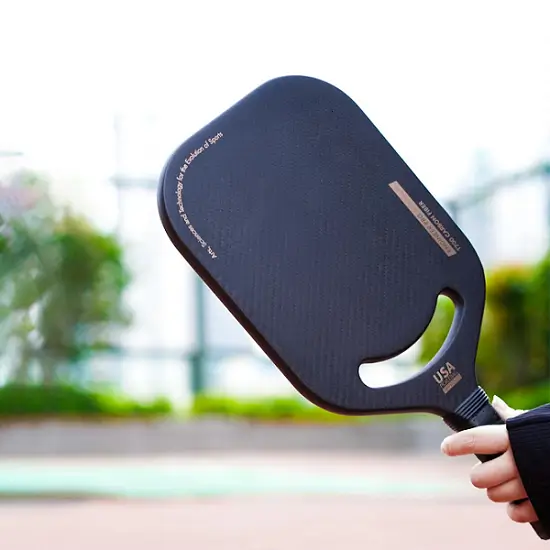
Face material defines what your paddle looks and feels like at the point of contact. Core material defines how the paddle responds when it’s hit. These are two independent choices, not a single material decision—a distinction many sourcing conversations skip over. Below we cover both layers separately.
Face Material × Retail Tier — Selection Guide for Brand Owners
| Face Material | Retail Tier Fit | Best For | Recommended Personalization |
|---|---|---|---|
| T700 carbon | Mid-tier to premium | Most B2B brand SKUs—the industry workhorse for performance paddles | UV print + laser engraving + sandblasted or textured matte |
| T800 carbon | Premium to tournament | Flagship SKUs, tournament programs, professional player tiers | UV print + laser engraving + textured matte for premium positioning |
| Kevlar | Premium to tournament | Brands targeting durability claims, control-oriented player segments | UV print with brand color systems, laser-engraved end cap |
| Titanium | Premium specialty | Differentiated SKUs, niche premium positioning | UV print with metallic-friendly color palettes |
Our complete carbon fiber paddle series covers the full T700 and T800 ranges with tested combinations across both cold press and thermoformed construction.
Core Material Options — Polymer Honeycomb vs Trufoam Foam Core
| Core Type | Response Profile | Best For | Pairing Notes |
|---|---|---|---|
| Polymer honeycomb | Crisp pop, defined sweet spot, balanced power and control | The default core for most personalized SKUs across both construction methods | Compatible with all face materials, both cold press and thermoformed, with or without edgeless construction |
| Trufoam foam core | Softer feel, dampened response, more forgiving touch shots | Brands targeting control-oriented players or beginner-friendly positioning | Works well in framed (non-edgeless) builds; not recommended for edgeless construction |
Most B2B SKUs land on polymer honeycomb because it suits the broadest player profile and supports the widest range of construction options. Trufoam foam core is a deliberate choice when the brand’s positioning calls for a softer, more forgiving feel—and it must be specified at the spec lock stage, not added late in the production cycle.
Color Customization for Personalized Pickleball Paddles
Color customization is available across three independent areas of the paddle: the face (where the UV-printed graphics live), the edge guard, and the grip. A brand can specify each area separately, allowing for combinations that align with the brand’s full visual system rather than relying on stock color combinations.
This three-area control matters more than it initially appears. A paddle with coordinated face artwork, edge guard color, and grip color reads as a deliberate brand asset—a paddle that customers and players associate with the brand. A paddle with a printed face but stock edge guard and grip looks assembled rather than designed, regardless of how strong the face artwork is.
Provide brand color specifications using Pantone references where possible, or supply physical color samples for matching. We confirm color matches at the sample stage with a physical color sample shipped to your QA contact—color matching from screen-only previews introduces too much variance for B2B production decisions.
Custom Packaging & Pickleball Accessories for Personalized Paddle Brands
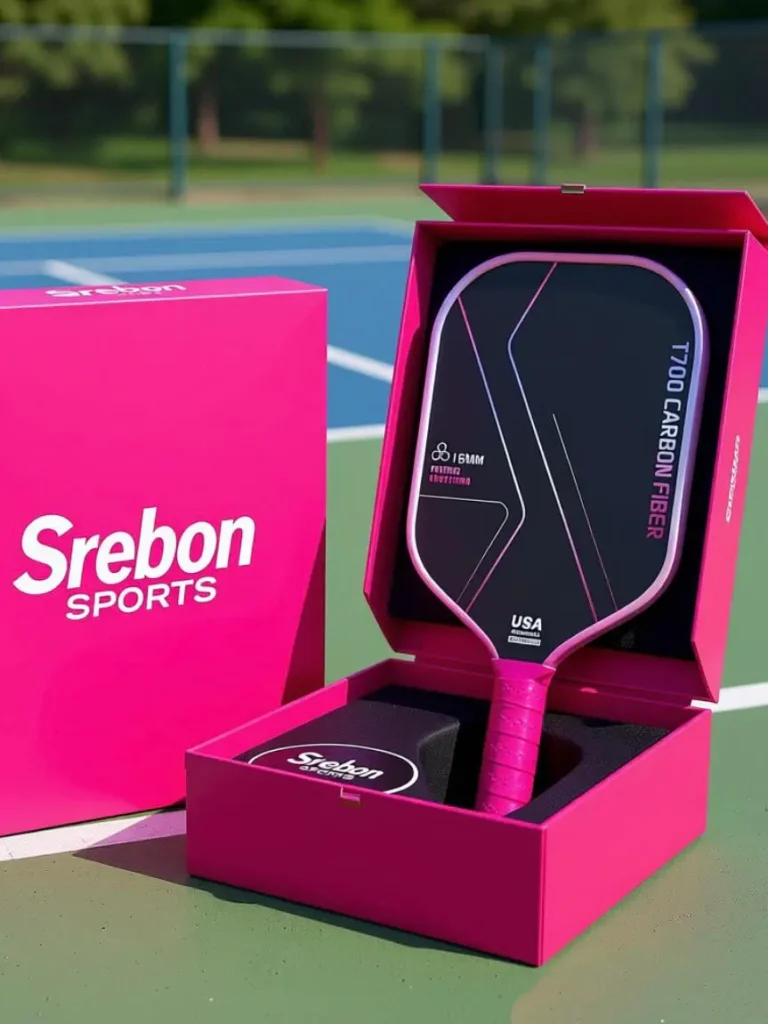
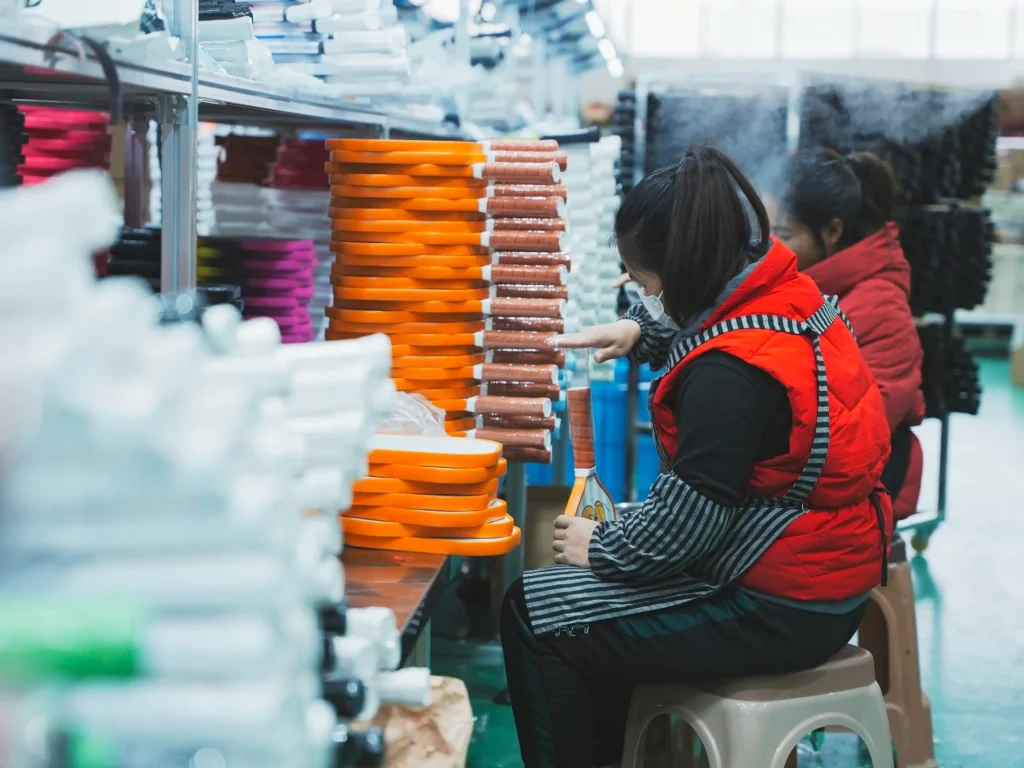
Most paddle factories deliver only the paddle; the brand then has to source packaging and accessories from separate suppliers. The result is either delayed launches—waiting for packaging to catch up with paddle production—or visual inconsistency between the paddle and what surrounds it. We manufacture both layers in-house: the packaging the paddle ships in, and the accessories that complete the brand’s product range.
Packaging Options — From Bubble Bags to Premium Boxes
| Packaging Option | Cost Profile | Best For | Branding Capability |
|---|---|---|---|
| Bubble bag | Lowest cost | Bulk wholesale shipments, B2B-only SKUs, e-commerce sellers using their own outer packaging | Sticker label only |
| Branded packaging box | Mid-range | Retail-ready SKUs, e-commerce DTC, retail displays | Full UV print on box, brand color matching, multiple panel designs |
| Personalized pickleball paddle covers | Mid-range | Premium SKUs, gift programs, retail upgrade tiers | Brand color, embroidered or printed logo, optional carrying strap |
| Paddle bag | Higher | Tournament programs, club-level SKUs, premium gift sets | Full brand customization, multiple compartment options |
For brand owners scaling toward personalized pickleball paddle wholesale orders, we recommend evaluating packaging at the same time as paddle specification—not as a follow-up decision—because the packaging cost is typically 8–15% of the total per-unit landed cost, large enough to affect retail price positioning.
Logo Printing on Boxes — Brand Consistency End-to-End
The same UV print process that handles paddle face graphics applies to packaging boxes. The advantage of running both at one facility is color consistency end-to-end: the red on the box matches the red on the paddle face because both are printed using the same color reference, the same ink system, and the same color confirmation process. When packaging and paddle come from separate suppliers, color drift between the two is the most common—and most visible—brand consistency failure.
For brands transitioning from personalized pilot orders to private label production, the box color reference becomes a brand asset that carries forward across SKUs. We retain confirmed color references in our production records so reorder runs match the original confirmation rather than drifting batch-by-batch.
Pickleball Accessories We Manufacture
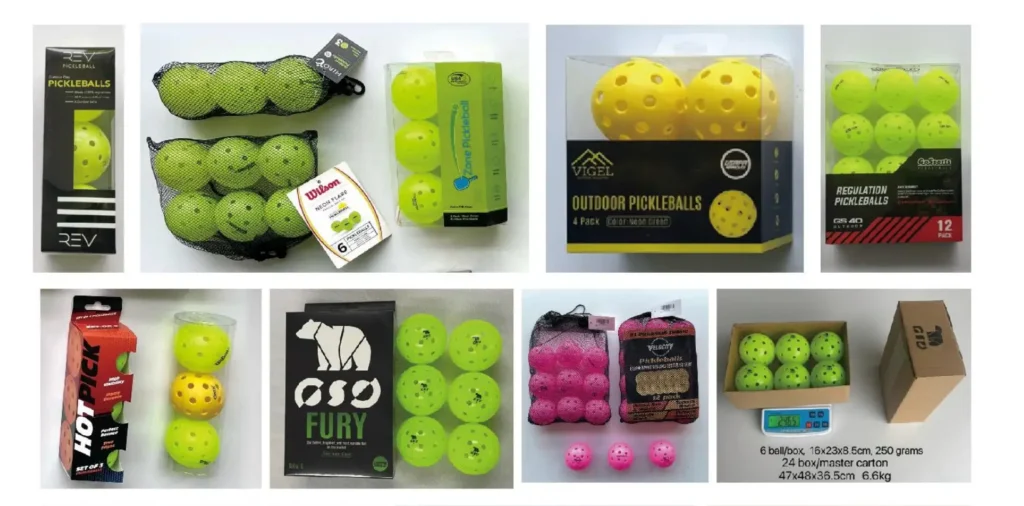
Beyond paddles and packaging, we manufacture the related pickleball accessories that complete a brand’s product range: paddle covers, grip overwrap and replacement grips, paddle bags and travel bags, pickleballs, and court accessories. Sourcing these alongside the paddle order means the entire brand product range arrives at one delivery date, in one shipment, with consistent brand color and quality standards.
The five accessory categories we typically include in B2B brand orders:
- Paddle covers (neoprene, EVA, or fabric — branded with UV print or embroidery)
- Grip overwrap and replacement grips (multiple textures and brand colors)
- Paddle bags and travel bags (single-paddle through multi-paddle configurations)
- Pickleballs (indoor and outdoor specifications, branded packaging available)
- Court accessories (portable nets, court markers, training aids)
How to Vet a Personalized Paddle Manufacturer — A 6-Point B2B Checklist
Use this checklist to evaluate any factory quoting on your personalized paddle project. A capable manufacturer answers all six clearly and in writing; vague answers on more than one point are a signal to keep looking.
- Personalization method disclosure. Ask which specific method (UV print, laser engraving, label) will be used for each design element on each paddle area. Vague “logo printing” without method specification is a flag—it usually means heat transfer or pad printing.
- Surface finish recommendation logic. Send the artwork and ask which surface finish the factory recommends and why. A capable partner ties the recommendation to the artwork type, not to whichever finish has shorter lead time.
- Cold press and thermoformed both available. Confirm the factory manufactures both construction methods in-house. Factories that only make one are limited to selling you what they have, not what your SKU needs.
- Face material and core material specified separately. The quote should specify face material and core material as independent line items. A quote that bundles them under “carbon paddle” is hiding decisions that matter.
- MOQ flexibility for personalized pickleball paddle bulk orders. A factory that requires the same MOQ for personalized as for full custom is treating personalization as if it were custom. Reasonable MOQs for personalized are 50–200 pcs; reasonable MOQs for full custom are 500–1,000 pcs.
- Sample-to-bulk timeline commitment in writing. Sample lead time should be 3–7 days; bulk lead time should be 7–15 days for personalized orders. Get these in writing in the quotation, not just verbally.
How to Source Personalized Pickleball Paddles: B2B Buyer Paths
The right sourcing approach varies by buyer type. The five paths below cover the most common B2B scenarios we work with.
Brand Owners Building a New SKU Line
Start with a personalized pilot run of 50–200 pcs to validate market response, then scale to private label production at 500–1,000 pcs once the SKU performs. A typical configuration for new SKU launches is a T700 carbon fiber thermoformed paddle with textured matte finish and brand-color UV print on a polymer honeycomb core. Lead time from spec lock to delivery for the pilot run is typically 3–4 weeks including sample approval.
Distributors Adding a Branded Tier to Their Catalog
Distributors typically already carry stock paddles and want a branded tier to differentiate from competitors selling the same brands. Personalized paddles at 200–500 pcs per SKU let you add 2–3 branded tiers without overcommitting capital. Pair with branded packaging to support retail placement.
E-commerce Sellers (Amazon / Shopify / DTC)
For Amazon and Shopify sellers, personalized paddles are the fastest route to a branded SKU that can support a unique product detail page. Start with 100–300 pcs per SKU; pair with branded packaging if the storefront positions premium; use bubble bag packaging if the storefront positions value-tier.
Recent example: In Q4 2025, an Australian e-commerce brand placed a 170-pc personalized order—T700 thermoformed paddles, sandblasted matte finish, full-face UV print, branded packaging boxes with brand-color UV-printed logos, and paddle covers. Total cycle from spec confirmation to shipment was 18 days. First-batch QC pass was 178 acceptable units. The same brand returned 60 days later for a 600-pc private-label production run of the same SKU.
Retailers Equipping In-Store Programs
Retailers running in-store demo programs, club partnerships, or store-branded ranges typically need 100–500 pcs per SKU with full retail packaging. Personalized paddles let retailers offer a store-exclusive product without the inventory risk of full custom development.
Wholesalers Building Personalized Pickleball Paddle Wholesale Orders
Wholesalers serving multiple downstream B2B customers typically order bulk pickleball paddles at 500+ pcs per SKU with bubble bag packaging for cost efficiency. Personalization for wholesalers is often light—stamped logos and end-cap engraving rather than full-face graphics—because the downstream customer often adds their own retail-tier branding.
Order Personalized Pickleball Paddles from Apexonsport: MOQ, Sampling & Bulk Production
The path from inquiry to delivered bulk order at Apexonsport follows six stages: inquiry → spec alignment → process recommendation → sample production → sample approval → bulk production. Total cycle for a typical personalized order—from initial inquiry to received bulk shipment—is 3 to 5 weeks, depending on sample iteration cycles.
- MOQ: 50 pcs for personalized paddles
- Sample lead time: 3–7 days from spec confirmation
- Bulk lead time: 7–15 days for personalized orders after sample approval
- Sample iterations: One revision included in standard process; additional iterations available
- Shipping terms: FOB, EXW, or DDP available
To start a project, send your design files (vector format preferred for UV print artwork), target paddle specifications (face material, core material, construction method, weight target), order quantity, and target delivery date. We respond with a process recommendation, quote, and sample lead time within two business days. For brand owners exploring full custom development beyond personalization, our OEM personalization process page outlines additional capabilities including proprietary mold development and custom shape engineering.
Frequently Asked Questions About Personalized Pickleball Paddles
Q1: What is the difference between personalized, custom, and private label pickleball paddles?
Personalized paddles apply brand-specific surface elements (UV print, laser engraving, labels) to existing paddle structures. Custom paddles redesign the structure itself—shape, materials, core, weight balance. Private label combines a personalized or custom paddle with branded packaging and a brand-owned SKU/UPC. The three differ in MOQ, lead time, capital exposure, and best-fit buyer type.
Q2: What is your MOQ for personalized pickleball paddles?
50 pcs for personalized paddles. Full custom (proprietary shape, custom core engineering) typically requires 500–1,000 pcs MOQ.
Q3: How long does sampling and bulk production take?
Samples are produced in 3–7 days from spec confirmation. Bulk production for personalized orders takes 7–15 days after sample approval. Total cycle from inquiry to delivered bulk shipment is typically 3–5 weeks.
Q4: Can I combine UV print, laser engraving, and labels on the same customizable pickleball paddle?
Yes. A typical configuration combines all three: UV print for face graphics and color systems, laser engraving for permanent marks on the end cap and edge guard, and labels for compliance markings or batch codes. The three methods complement each other rather than competing.
Q5: Which surface finish should I choose — sandblasted matte or textured matte?
Sandblasted matte for full-face graphics and large-area artwork. Textured matte (woven pattern) for localized logos and minimalist designs. The choice should match what your brand artwork covers, not personal preference.
Q6: Do you offer both cold-pressed and thermoformed personalized paddles?
Yes. Both construction methods are available with the full range of face materials (T700, T800, Kevlar, titanium) and both core options (polymer honeycomb, trufoam foam core). Cold press fits entry-level retail tiers; thermoformed fits mid-tier through premium positioning.
Q7: Can I customize packaging and accessories alongside my paddles?
Yes. We manufacture branded packaging boxes with full UV print, paddle covers, paddle bags, grips, pickleballs, and court accessories in-house. Sourcing all elements from one factory ensures color consistency and a single delivery date.
Q8: Do you provide private label support beyond personalization?
Yes. We support private label production including brand-owned SKU coding, retail packaging design, UPC/barcode integration, and color reference retention across reorder runs. The typical path is a personalized pilot run followed by a scaled private label production run once the SKU performs.
Apexonsport is a pickleball paddle manufacturer based in China, producing personalized paddles, custom OEM/ODM builds, and private label programs for B2B buyers worldwide. Our in-house capabilities cover UV print, laser engraving, label application, both surface finishes, both construction methods, all major face materials (T700, T800, Kevlar, titanium), both core options (polymer honeycomb and trufoam foam core), branded packaging, and the full pickleball accessories range. Written by the Apexonsport production team.