Custom pickleball paddle cost typically ranges from $8 to $50 per paddle at the factory level (FOB China, MOQ 50 pieces) depending on construction, face material, surface finish, core type, and personalization complexity. This guide breaks down every variable that moves your unit price — so you can build a realistic budget before sending your first inquiry. For the full picture of what “custom” actually means in B2B paddle sourcing, see our custom pickleball paddle production page.
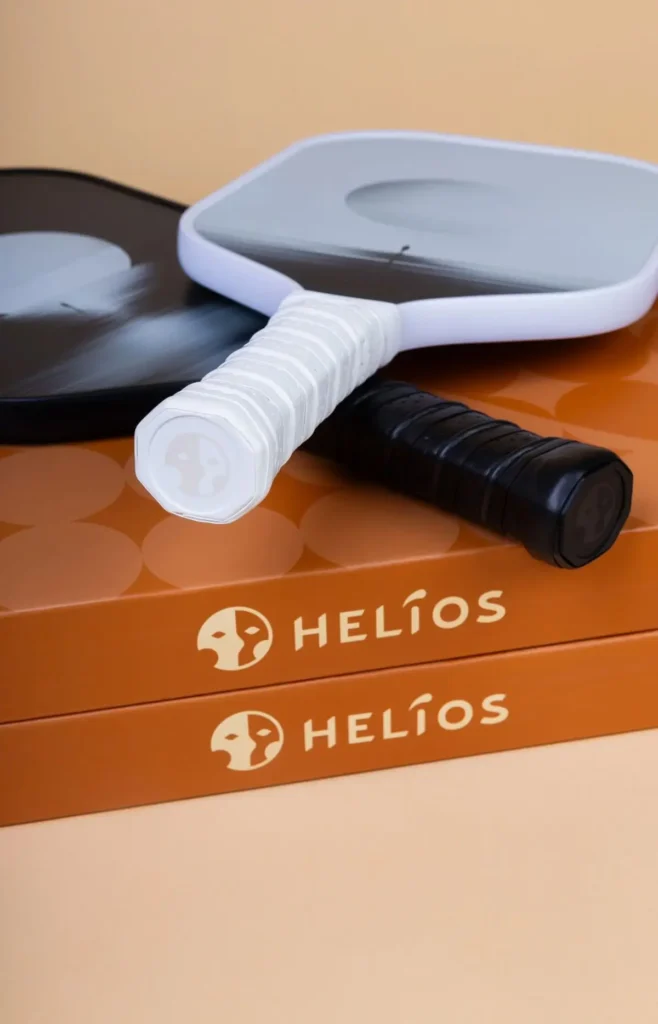
What is the actual cost of a custom pickleball paddle?
At the factory level, a custom pickleball paddle costs anywhere from $8 to $50 per piece for an MOQ of 50, with the median commercial order landing in the $14–$25 range. The wide spread is not arbitrary — it reflects five distinct construction tiers that we (Apexonsport) actively produce, each built for a different retail price point and target buyer.
Here is the real factory pricing structure at MOQ 50 (FOB China):
| Tier | Typical Configuration | Price Range (USD/pc) |
|---|---|---|
| Entry | Cold press + Fiberglass or T300 carbon face + PP honeycomb core + UV print | $8 – $14 |
| Mid | Cold press + T700 carbon face + PP honeycomb core + textured/sandblasted matte finish | $11 – $16 |
| Mid-High | Thermoformed + T700 carbon face + PP honeycomb core + foam protection wall + textured/sandblasted matte or hydrographic finish | $14 – $25 |
| Premium | Thermoformed + T700 carbon face + EPP core + textured/sandblasted matte or hydrographic finish | $26 – $39 |
| Flagship | Thermoformed + T700 / T800 / Kevlar / Titanium face + (MPP + EVA) or (EPP + EVA) hybrid core | $31 – $50 |
Most B2B brand owners and distributors land in the Mid to Mid-High tier — that range gives a strong retail markup ($45–$90) while keeping unit cost low enough to absorb personalization, packaging, and freight. E-commerce sellers running Amazon or DTC stores tend to pick the Premium or Flagship tier, where the higher retail ceiling ($120–$200) supports paid acquisition costs.
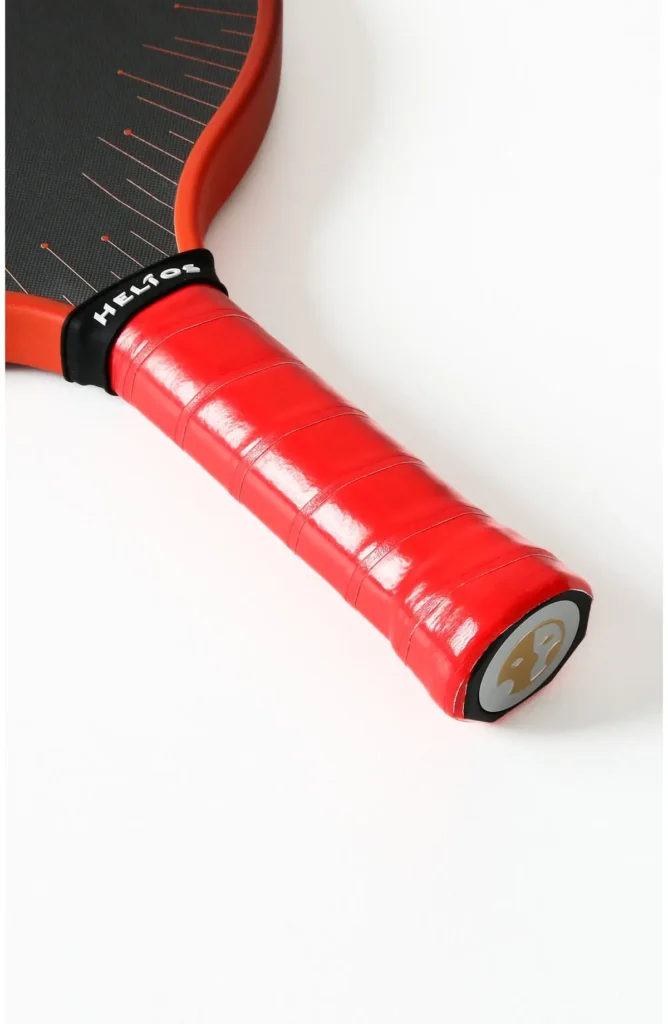
Why do prices vary so much between custom paddle factories?
If you have collected three or four quotes for what looks like the same paddle and the prices range from $11 to $40, the difference is almost never about factory efficiency. It is about which of the five cost variables each factory is using — and which ones they are silently cutting.
Here are the five variables that move your unit price the most, ranked by impact:
| Variable | Cheaper Option | Premium Option | Approx. Cost Impact |
|---|---|---|---|
| Face material | Fiberglass / T300 carbon | T800 carbon / Kevlar / Titanium | +$5 – $15/pc |
| Construction | Cold press | Thermoformed one-piece | +$3 – $8/pc |
| Core material | PP honeycomb | EPP / MPP+EVA / EPP+EVA | +$2 – $8/pc |
| Surface finish | Standard UV print | Sandblasted matte / Textured matte / Hydrographic | +$0.5 – $2/pc |
| Personalization method | UV print only | UV print + Laser engraving + Labels combined | +$0.3 – $1.5/pc |
The two largest movers are face material and construction — together they account for roughly 60–70% of the price gap between an $8 entry paddle and a $50 flagship paddle. This is also where some lower-tier suppliers cut quietly: a quote labeled “T700 carbon” may actually be T300 underneath a thin T700 surface ply, and “thermoformed” sometimes means cold press with edge thermoforming only. When you compare quotes, ask each factory to specify the exact face grade, core type, and full thermoforming process in writing.
How does MOQ change your custom pickleball paddle cost?
Order quantity is the second-biggest lever on your unit price. At Apexonsport, the per-paddle cost drops on a predictable curve as MOQ rises:
| Order Quantity | Unit Price (vs MOQ 50 baseline) | Example: Mid-tier paddle ($14 baseline) |
|---|---|---|
| 50 pcs (MOQ) | 100% (baseline) | $14.00/pc |
| 200 pcs | ~90% | ~$12.60/pc |
| 500 pcs | ~85% | ~$11.90/pc |
| 1,000 pcs | ~78% | ~$10.92/pc |
Notice the curve flattens after 500 pieces. From 50 to 200, you save 10% per piece. From 500 to 1,000, you save only another 7%. The sweet spot for first-time B2B buyers is the 200–500 range — large enough to unlock meaningful tooling and bulk-buying savings, small enough to keep cash flow and inventory risk manageable.
Also worth knowing: the MOQ discount is per SKU. If you order 500 paddles split across 5 different colorways or logos, each color counts as a separate SKU run, and most of them won’t cross the 200-piece threshold. Brand owners who consolidate around 1–2 hero SKUs almost always get a better effective unit cost than those who launch with 5+ variants on the first order.
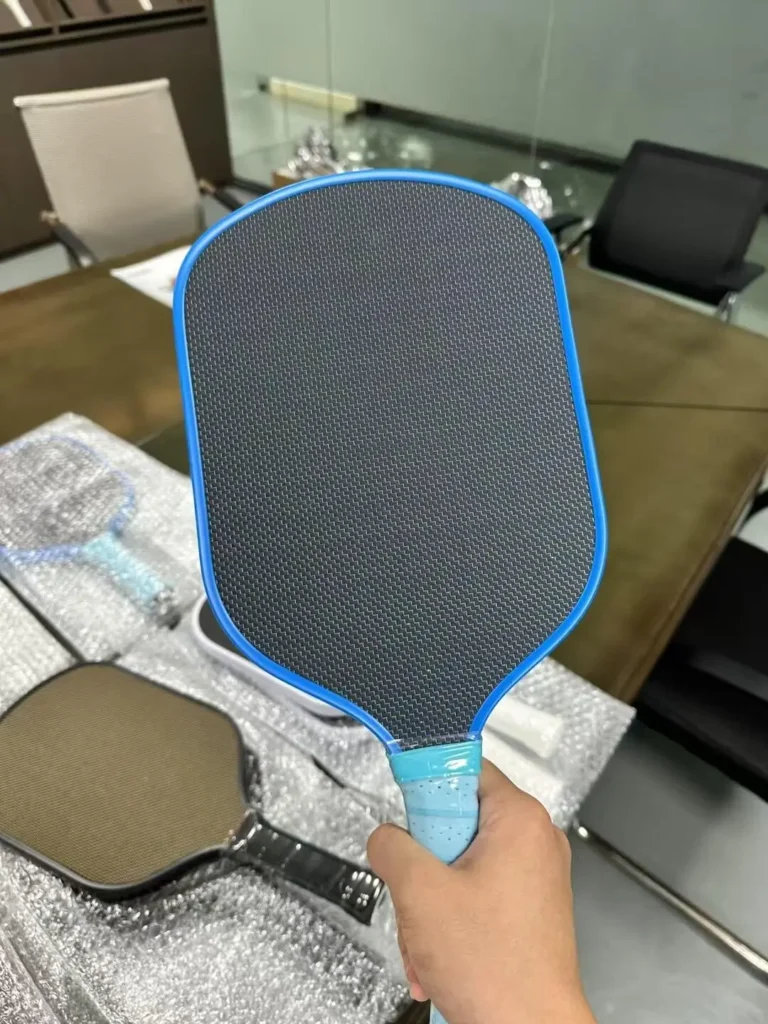
How much does sampling cost — and is the fee refundable?
Sampling is where most first-time buyers underestimate their initial outlay. Here is what to budget at Apexonsport:
- Sample fee: $35–$50 per paddle (varies by tier — flagship samples sit at the higher end)
- Express shipping: $50–$70 for a single sample to most countries; $80–$120 when consolidating 3–5 samples in one shipment
- Sampling lead time: 3–7 working days after artwork and specifications are confirmed
Two cost questions almost every first-time buyer asks: are sample fees refundable on the bulk order, and how many free revisions do I get?
On refundability: many factories — Apexonsport included — apply part of the sample fee toward the bulk order once it is confirmed, but specific refund percentages and minimum bulk quantities vary case by case. [VERIFY: state your factory’s specific policy here, e.g. “we credit 100% of sample fees toward bulk orders of 200+ pieces”]. Always get this in writing on the sample order, not just over WhatsApp.
On revisions: minor artwork tweaks (resizing, repositioning, color shift within Pantone family) are typically absorbed at no extra cost during the first 1–2 rounds. Major redesigns — new logo, new layout, new color system — are quoted separately because they involve fresh proofing and material setup. [VERIFY: confirm your specific free-revision count and re-sampling fee, e.g. “the third revision onward incurs a $25 design fee”].
DDP vs EXW vs FOB: which shipping term costs you less?
Most cost comparison guides skip this section, but the trade term you choose can change your landed cost by 5–15% — sometimes more on small orders. Here is the real-world breakdown:
| Term | Who handles what | Added cost vs EXW (per pc) |
|---|---|---|
| EXW (Ex Works) | You arrange pickup at factory, export clearance, freight, import clearance, and last-mile delivery | $0 (baseline) |
| FOB (Free On Board, China port) | We handle export clearance, trucking to port, and loading. You handle ocean freight, import clearance, and delivery. | +$0.50 – $0.80/pc |
| DDP (Delivered Duty Paid) | We handle the entire journey including destination duties and last-mile delivery | Quoted case-by-case (depends on destination country, duty rate, and lane) |
Worked example for a 500-pc mid-tier order at $11.90/pc baseline:
- EXW total: $11.90 × 500 = $5,950 (you arrange everything from the factory door onward)
- FOB total: ($11.90 + $0.65) × 500 = $6,275 (we get it onto the ship in China)
- DDP total: quoted individually — typically the most expensive line-item but the lowest hassle
Which term is right for you depends on order size and your team’s logistics capacity:
- Orders under 400 pieces: FOB usually delivers the best total cost. The flat-rate components of DDP (customs broker, last-mile carrier minimums) hit small orders disproportionately.
- Orders 400+ pieces with no in-house logistics team: DDP often becomes the cleanest option once you account for the time cost of managing freight forwarders, customs filings, and trucking.
- Indian and Southeast Asian buyers: most have established import brokers and prefer EXW or FOB to keep control over duty optimization.
- European buyers: tend toward DDP because of CE marking and packaging compliance — having the factory handle destination paperwork removes a real risk.
- US buyers: split roughly evenly between FOB and DDP. FOB if your 3PL is already set up; DDP if you are starting fresh.
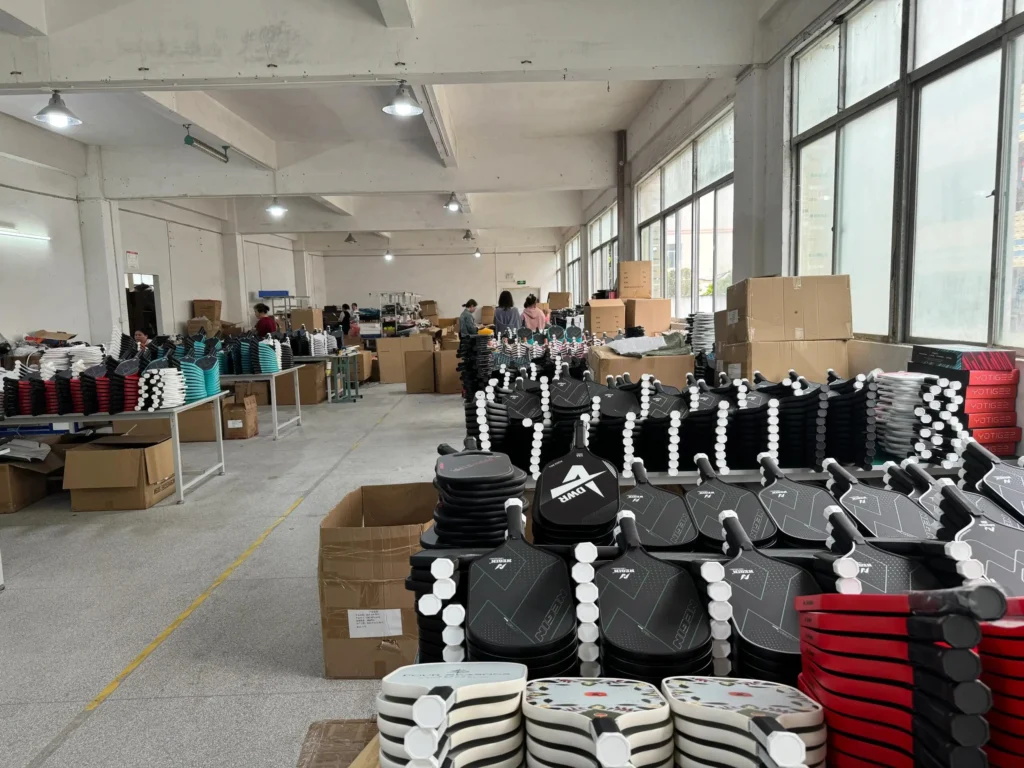
What hidden costs do most first-time buyers miss?
The unit price you see in a quote is rarely the final landed cost. In our experience working with B2B brand owners and distributors, the following 7 cost categories add 8–15% to the original quote — and sometimes substantially more if a buyer is unprepared:
- 1. Design file rework fees. If your AI/PSD source files are low-resolution, missing fonts, or built in non-vector format, the factory may need to rebuild your artwork as a print-ready vector. [VERIFY: state your design fee, e.g. “$30–$80 per file”]. Bring properly built vector files and this cost disappears.
- 2. Excess sampling revisions. Beyond the included rounds, additional major redesigns are billed separately (covered in the sampling section above).
- 3. Destination port clearance and last-mile delivery. The single biggest blind spot for EXW and FOB buyers. Customs brokerage, port handling charges, ISF filings (US), and trucking from port to your warehouse can add several hundred to a few thousand dollars depending on lane and order size.
- 4. Pre-paid duties on DDP shipments. For some destination countries, the factory pays duties upfront on your behalf and adds them to the DDP rate. Always confirm whether duties are included in the DDP quote or billed as a pass-through.
- 5. Packaging upgrades. Standard bubble bags are generally included or near-zero cost. Branded gift boxes, paddle covers, or paddle bags add real cost — anywhere from $1 to $4+ per paddle depending on box quality and finish.
- 6. Peak-season rush production. Standard production is 7–15 days. Compressing to 7 days during peak season (March–June for Northern Hemisphere brands launching summer collections) typically incurs an expedite premium.
- 7. USAPA approval testing. If you need official USAPA approval for sanctioned tournament play, the testing fee is paid separately to USAPA — typically $300–$500 per paddle model. Some factories handle the submission; others leave it to the buyer.
The fix for hidden costs is not negotiating them down after the fact — it is identifying them up front. The next section gives you a structured way to do that.
A pre-inquiry budget checklist for custom pickleball paddles
Before you send your first inquiry, walk through this checklist. Buyers who arrive with these answers locked in get more accurate quotes, faster sampling, and significantly fewer surprises during production:
- Target retail price tier confirmed (this drives which of the 5 cost tiers you should quote)
- Construction decided: cold press or thermoformed one-piece
- Face material decided: fiberglass / T300 / T700 / T800 / Kevlar / Titanium
- Core material decided: PP honeycomb / EPP / MPP+EVA / EPP+EVA
- Surface finish decided: standard UV / sandblasted matte / textured matte / hydrographic
- Personalization methods decided: UV print, laser engraving, labels — or a combination
- Packaging decided: bubble bag / branded box / paddle cover / paddle bag
- Order quantity locked (and SKU count clear — fewer SKUs = better effective price)
- Shipping term selected: EXW / FOB / DDP based on your logistics setup
- Buffer of 8–15% reserved for design fees, freight surcharges, and certification
- Print-ready vector artwork prepared (AI or PDF, with fonts outlined and Pantone codes specified)
If you can answer eight or more of these confidently, you are ready to send a serious inquiry. Send it to the Apexonsport pickleball paddle factory with this checklist filled in and we can usually return a binding quote within 24 hours, and a confirmed sample within 3–7 working days.
Frequently Asked Questions About Custom Pickleball Paddle Cost
Q1: What is the cheapest custom pickleball paddle I can order?
The lowest factory price for a custom pickleball paddle is around $8 per piece at MOQ 50 — for a cold-pressed paddle with fiberglass or T300 carbon face, PP honeycomb core, and standard UV print personalization. This tier suits promotional giveaways, club entry-level paddles, and gift sets. For anything sold in retail, most brands move up to the Mid tier ($11–$16) where the playing feel and durability begin to match buyer expectations.
Q2: How does MOQ affect custom pickleball paddle pricing?
Per-paddle cost drops in clear steps as quantity rises: 50 pieces is the baseline, 200 pieces saves around 10%, 500 pieces saves around 15%, and 1,000 pieces saves around 22%. The marginal savings flatten after 500 pieces, which is why the 200–500 range is the sweet spot for first-time orders.
Q3: Are sample fees refundable on bulk orders?
At Apexonsport, sample fees are partially or fully credited toward bulk orders depending on order quantity and timing. [VERIFY: state your specific refund policy]. Always confirm the refund terms in writing on your sample order before paying — verbal promises are not enforceable across borders.
Q4: Should I choose DDP, EXW, or FOB for my paddle order?
For orders under 400 pieces, FOB usually delivers the best total cost. For larger orders without an in-house logistics team, DDP often wins on convenience and total cost-of-ownership. EXW makes sense only when you have established freight forwarders and customs brokers in your origin and destination countries.
Q5: What hidden costs should I budget for?
Budget an additional 8–15% on top of your unit-price quote to cover design rework, destination port fees, packaging upgrades, peak-season rush charges, and certification testing if needed. Buyers who skip this buffer routinely overspend their initial budget by 10–20%.
Q6: How long does it take to get a quote from Apexonsport?
Once we receive a complete inquiry — construction, materials, finish, personalization, quantity, packaging, and shipping term — we typically return a binding quote within 24 working hours. Sampling follows in 3–7 working days after artwork and payment confirmation, and bulk production runs 7–15 days depending on order size.
Written by the Apexonsport production and sales team — pickleball paddle manufacturers serving B2B brand owners, distributors, e-commerce sellers, and wholesalers across North America, Europe, and Southeast Asia.